全家福
GT Voice: China-S.Korea 'cool' trade flourishes amid heat waves_我的网站

A |
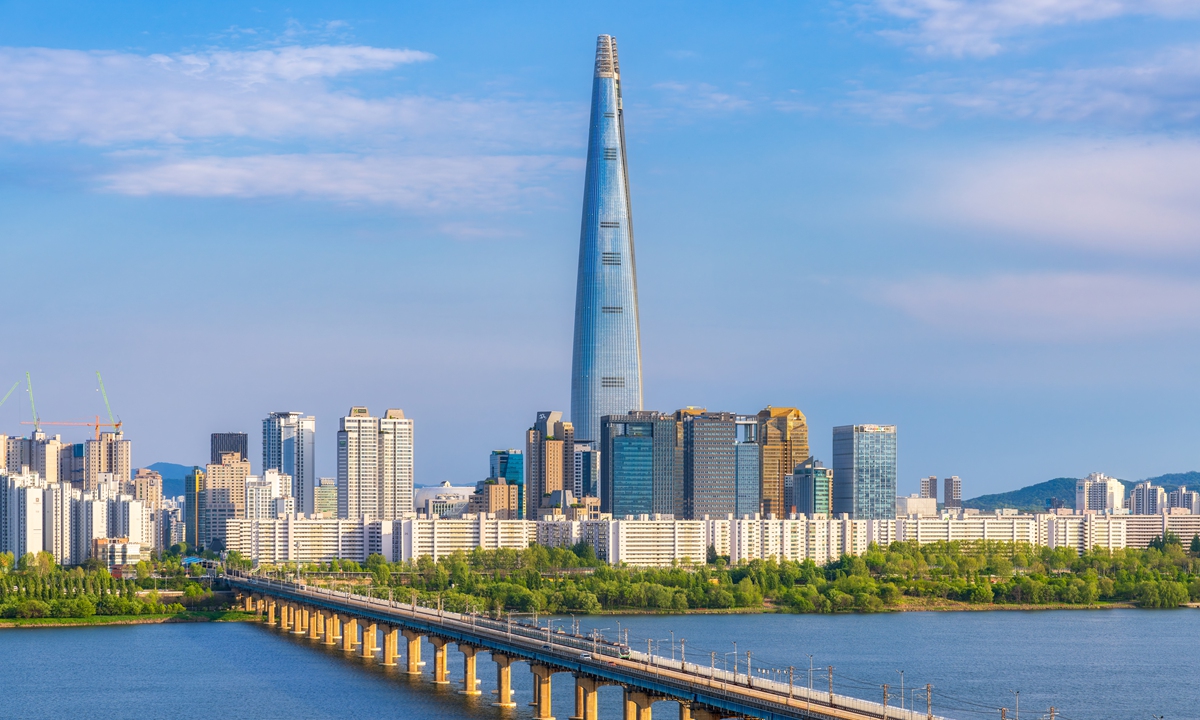
A view of the Seoul skyline Photo: VCG
South Korea is grappling with scorching heat waves this summer, with temperatures soaring above 40 C in its capital city of Seoul for the first time since 2018. The extreme weather has dominated newspaper headlines lately, which has wreaked havoc on the people's health and agricultural production there.
For instance, with mass die-offs at the country's fish farms and catches declining, seafood prices are trending higher, according to South Korean media reports. Meanwhile, South Korean consumers' demand for cooling products is surging.
Against this backdrop, the unique strengths of China-South Korea economic and trade cooperation - characterized by flexible responses and regional short-chain supply arrangements - have been fully demonstrated.
Unlike countries in Europe and elsewhere in the West, or regions that rely on long-distance transportation, China and South Korea share geographical proximity and mature cross-border logistics system. Built through years of in-depth industrial collaboration, their circulation network drastically shortens supply chain routes and turnover cycles, delivering vital response in time of need.
Since the onset of the summer heat waves, a diverse array of Chinese-made goods - frozen beverages, portable handheld fans, pet cooling accessories and others - has flowed to the South Korean market. The rapid replenishment has provided relief to South Koreans grappling with soaring temperatures.
The "cool" trade that has blossomed between the two countries is fundamentally a story of mutual benefit and complementary strengths. While Chinese cooling supplies enter the South Korean market, Chinese consumers' demand for South Korean summer cosmetics and personal care products is heating up too. These two seemingly separate trade flows essentially reflect the deep-seated trade complementarity between the two neighbors.
Since the beginning of summer, "cool-feeling" cosmetics have become a shopping hit among Chinese consumers. Many South Korean products, featuring lightweight textures, durability and sweat-proof performance, have won growing market popularity.
The two-way trade flow is rooted in the alignment of the two countries' industrial structures and consumer needs, allowing both consumers to access what they require in the trade of "cool products" and achieve mutually beneficial outcomes.
The structural underpinnings of this synergy run deep. China's strength in agricultural production, cold‑chain infrastructure, and large‑scale manufacturing complements South Korea's prowess in beauty product research and development, good quality control and sophisticated brand operation. Most importantly, their geographical proximity allows such industrial complementarity to flourish.
From a broader perspective, global climate change seems to continue interfering with economic life in increasingly unpredictable ways. Caught in this dual pressure of escalating climate shock and global industrial restructuring, the significance of regional economic cooperation is being redefined. It is no longer limited to expanding market access and cutting operational costs; instead, it is deeply tied to safeguarding people's basic livelihoods in time of sudden unexpected disruptions.
The shortened transportation window brought by geographical proximity boosts the supply chain's response speed, enabling it to swiftly counter market volatility triggered by sudden emergencies.
The deep industrial integration that China and South Korea have nurtured over the past decades across sectors including electronics, beauty, agricultural products and cold-chain logistics has laid an exceptionally solid foundation for bilateral cooperation.
Currently, global supply chains are facing shocks from geopolitical conflicts, rising trade barriers as well as surging extreme weather patterns, leaving many long-distance global supply chains increasingly fragile and prone to sudden breakdowns.
The short-chain cooperation between China and South Korea has demonstrated that, in the era of growing uncertainties in the world, tapping deeper into regional industrial complementary advantages and building more stable and flexible cross-border industrial and supply chains is both an efficient choice to reduce circulation costs and a practical path to fend off risks to ensure industrial stability and protect people's livelihood.
。 IT之家 7 月 21 日消息,科技媒体 The Decoder 昨日(7 月 20 日)发布博文,报道称谷歌 DeepMind 发布 GenCeption 模型,将预训练的视频生成器重新用于深度估计和分割等经典计算机视觉任务。

B |
IT之家援引博文介绍,大语言模型在学习预测下一个 Token 的时候,在训练过程中往往需要吸收语法、世界知识和上下文关系等内容。
但是在计算机视觉领域,视觉模型缺少等效的训练方法,主要由专业模型主导,包括用于分割的“Segment Anything”和用于深度估计的“Depth Anything”,每个模型都使用其特定的架构。

C |
谷歌 DeepMind 团队为此提出 GenCeption 模型方案,尝试将一个“生成视频”的 AI 模型逆向改造成一个能“理解世界”的视觉分析引擎。
GenCeption 打破了传统计算机视觉“一个任务一个专用模型”的格局,仅凭单一模型就能同时做好深度估计、图像分割、3D 姿态估计、表面法线预测和相机姿态估计等核心视觉任务。
GenCeption 基于阿里巴巴开源视频模型通义万相 Wan2.1 系列训练,与传统扩散模型需多步去噪不同,GenCeption 在一次前向传播中完成预测,从而提升视觉任务处理速度。

D | 模型通过文本提示指定任务,可输出深度图、表面法线图、分割掩码,并可处理相机运动表示。
训练数据以合成为主。论文称,数据集仅包含 7500 段视频,由 800 个数字人体模型与 200 段动作捕捉序列组合生成,再通过 Blender 在不同背景和镜头角度下渲染。

E |
泛化方面,GenCeption 几乎只在单人合成视频上训练,但可处理真实多人视频,也可迁移到动物和类人机器人类别。论文称,部分输出细节甚至超过训练时 Blender 渲染结果,可保留猫胡须和单根发丝边缘。
性能方面,论文给出两组处理时间数据:小模型处理 81 帧视频约需 6 秒;大模型参数量为 140 亿,处理同样长度视频约需 10 秒。
参考。
Current article:http://cp5boj.pisezuibanzoukou.cyou/e1vw60/mwtads.html
Published on:00:12:03